Rooted and Uprooted: What Trees Teach Us About Human Change

There’s a skinny Beech tree about 10 feet tall outside my window that I hastily transplanted last night. I dug it up from a shaded patch of woods surrounded by 70 foot mature Maple and Oak trees. It was at my property that’s 15 minutes away from my house.

My husband got Persimmon tree starters from a neighbor and he wanted to plant a grove at the property. I saw the established Beech tree and knew I had to have it in our backyard. We built a house two years ago and there are no mature trees, which hurts my nature-loving heart.

My dad worked in the veneer industry and I spent my life observing trees. It’s my safe place, my home. He taught me that the root ball is the most important part of digging up a tree if you want it to survive. He taught me that you should dig up a new tree with a diameter of at least three to five feet in order to preserve the root ball. Well, the Spring sun was getting ready to set in an hour and my husband wanted to test out his new boomerang that his sister brought home from Australia.

Since the tree cost nothing and we have hundreds of them, I told him to dig it up quickly, so we only dug a one to two foot root ball. My dad was probably rolling over in his grave.

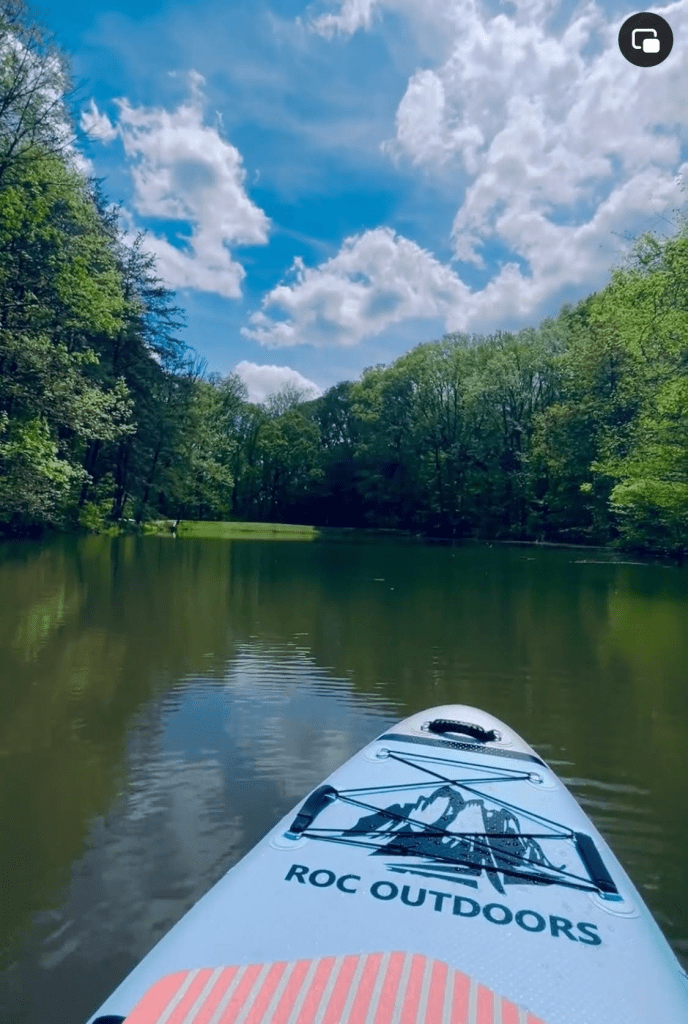
We got on the four wheeler hauling our ten foot tree and threw it in the pond so the roots didn’t dry out until we were ready to leave after his failed attempts at getting the boomerang to circle back.

We rushed home and immediately dug the hole. It was pure clay, which isn’t good. We dug it up from a sandy, loamy soil. Tree roots need air pockets to survive. I pushed it into the ground and smothered it in the clay, watering it with a rooting hormone. So much of me feels like it won’t take, but I will try everything to get it to survive because if I love something enough it will work out, right?

It looks beautiful in the morning light, but the leaves look droopy upon closer inspection. My heart sunk. That image won’t leave me because I’ve felt like that tree—cut off from what was familiar, stunned by the cold air of change, and unsure whether I’d survive the move.

Transplanting, whether of trees or of people, isn’t just a moment. It’s a season. One full of pain, patience, and quiet becoming.

As trees prepare for transplant, change begins long before the move. A tree must be pruned and roots partially loosened. The timing must be right—the soil prepared. You don’t just rip something out of the ground and expect it to thrive.

We’re the same. We know when something no longer fits—a relationship, a job, a version of ourselves—but leaving takes more than awareness. It takes readiness. When we rush, we tear something vital. When we delay too long, we risk shrinking in place. The body knows when it’s time and learning to listen is part of the work.

Even in perfect conditions, a tree experiences shock because of the root disturbance. It stops absorbing nutrients. It drops leaves. From the outside, it looks like it’s dying.

So do we.

When we leave the known behind, even for something better, we often fall apart before we rebuild. There’s grief, guilt, and that whisper of, “Maybe I made a mistake.” But that isn’t failure. It’s a natural part of the process. The old roots have been severed. The new ones aren’t established yet. It’s okay to feel lost in between.

Replanting requires the right soil. Where the tree lands matters. It needs sunlight, good drainage, and protection from wind. Without the right conditions, the transplant won’t take. I made all of those mistakes with my new Beech tree because I had no time or patience. I thought I could wing it on a hope and a prayer.

Humans need nourishing environments, too. Safe people. Quiet mornings. Gentle structure. You don’t owe anyone speed. You don’t need to prove your worth by blooming fast. Healing asks for presence, not performance.

Adaptation happens underground. For a while, nothing seems to happen. The branches stay bare. The growth is invisible. But underground, the roots are reaching, rebuilding, and testing the new soil.

We live this too. We think we’re stuck, but really we’re re-rooting. What looks like stillness is often transformation in disguise.

Eventually, if conditions are right, the tree adapts and thrives in it’s new location. The roots grow deeper. The trunk grows stronger. The stress of the move becomes a memory as the bloom returns.

And maybe, in time, you will feel that too—that this new place was not just an escape, but an arrival. You will feel that you are not just surviving, but thriving and that you’re not who you were before the transplant happened.

If you’re in a season of uprooting, know this: there is nothing wrong with you. This discomfort is not a mistake. It’s your system adjusting. Keep resting. Keep reaching. Let the roots take hold.

The bloom will come.

Broken Can Be Beautiful

My husband and I own beautiful acreage, which has been the biggest blessing of my life. I never dreamed I would have access to acres of natural habitat. For three years, I have spent countless hours alone amongst untouched forest and wildlife. The land hadn’t been logged in 50+ years. It was pristine, like something out of a fairytale.

I became deeply acquainted with all of the trees and had five main “sitting logs” where I would sit and talk to the trees or ponder about life. But 2024 took a hit on our land. Our family decided it would be in the best interest of the forest to get it logged, which fair. It helped pay off the land and it does help rebuild a stronger ecosystem when done correctly. However – it is UGLY! They leave so much debris behind, which the forest needs to heal itself…but it’s unsightly. The loggers only took the giant ones…the ones I fell madly in love with because they’re natural attention grabbers. I was devastated. I cried for a long time and refused to step foot on the property!

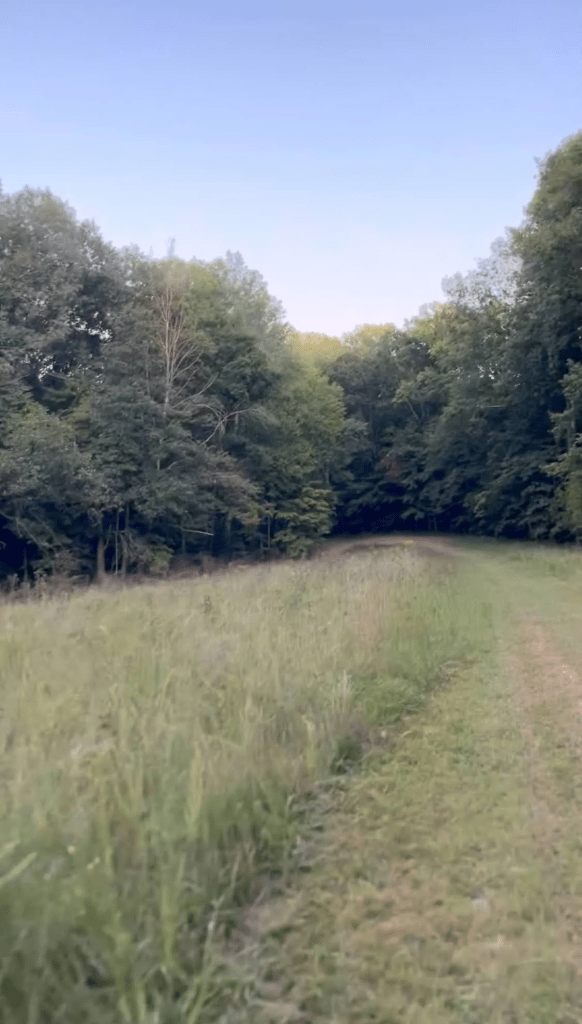
I didn’t know how this place could ever feel, or look, good again. I felt horrible for the trees. They lost their leaders. They lost the giants who protected and guided them. I felt bad for the meadow because it was torn to hell. The long blades of wild grasses blowing in the wind always made me feel like I was in a movie when I was walking down the lane.

Then a few weeks later, the worst storm in over 60 years blew through. Our newly open tree canopy created vast empty space for the high winds to rip/bend/twist/mangle trees. I wanted to puke. I screamed so loud the entire county could hear my guttural shrieks. I cursed in utter defeat. I thought it was punishment for getting the area logged. I didn’t want to go there anymore. I avoided most of the property for 5 months. It’s like seeing your loved ones mangled right in front of you. I only saw pain, darkness, and negativity. My eyes were only drawn to the ugly, rotting mess littering the forest floor. I couldn’t see the beautiful green canopy that still remained. I didn’t stare long enough to see the blades of grass poking through the clay dust.

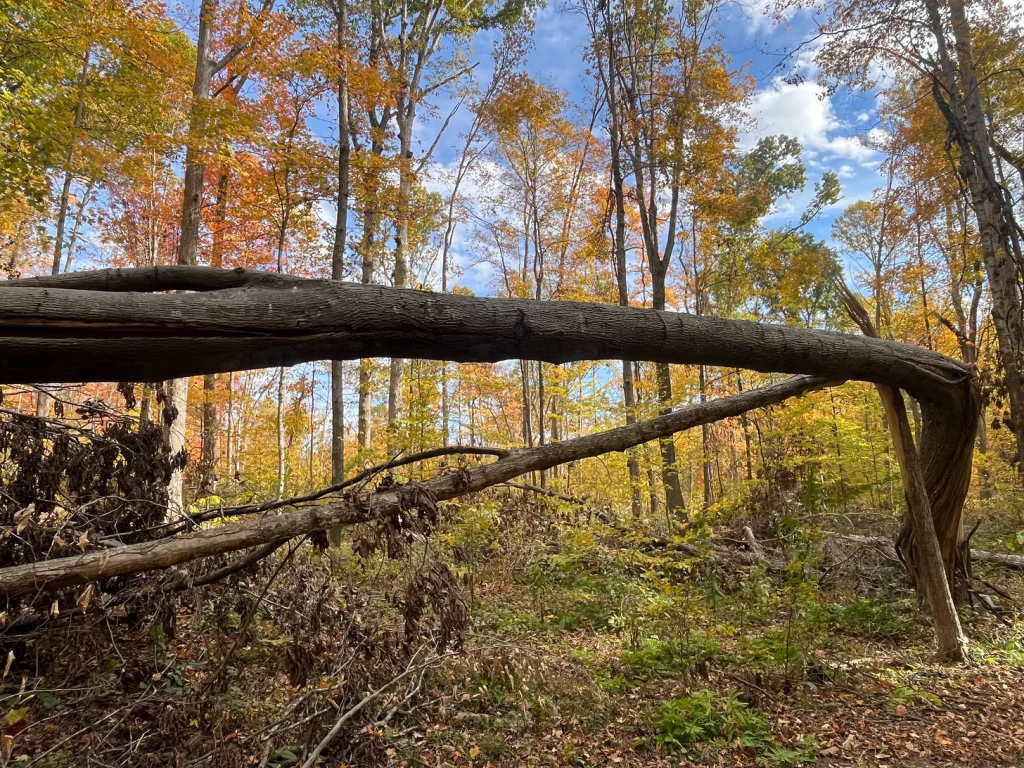
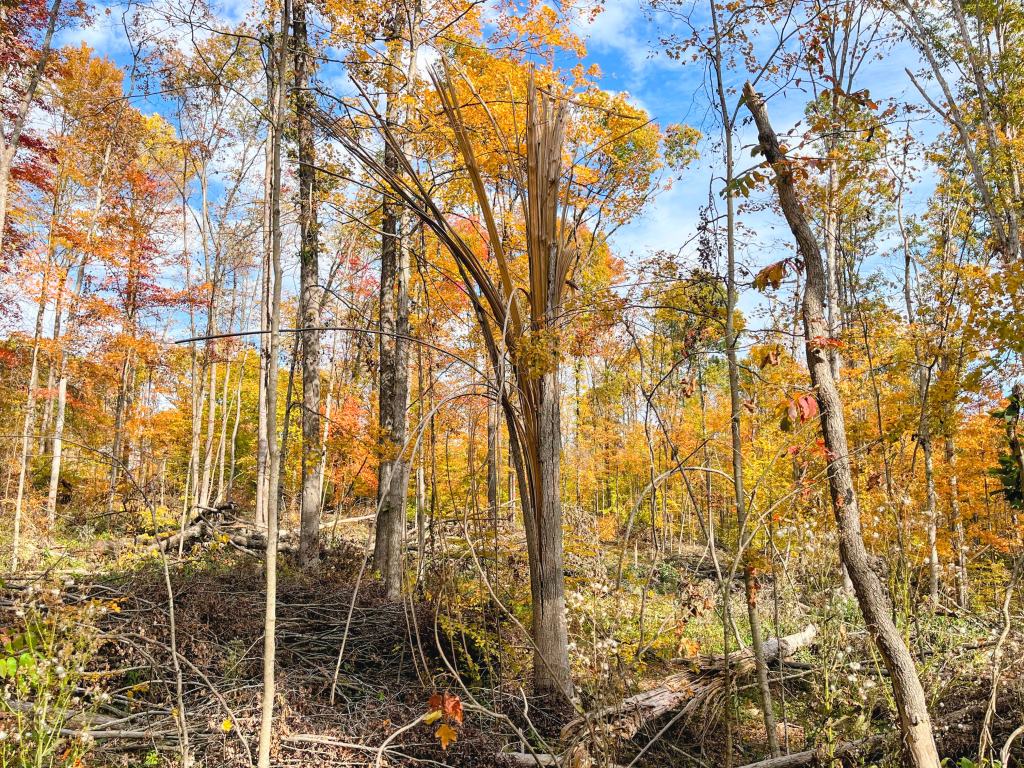
This used to be my favorite spot. It was filled with massive trees and the canopy was 100% full. It was breathtaking. It enveloped me in the most beautiful dappled shade. The first picture with the tree wrapped around another tree is about 50 feet to the left of this tree, which I have now dubbed as String Cheese. What are we even supposed to do with these? They are a death trap for novices like us to try to remove. We definitely would have to hire someone, but we can’t afford it. There are acres of forest like this!

I remember the first day that I spent time there. I was alone and bored, so I hiked. My husband had been working like crazy to clean the place up, but with a full time job and no help from me, it was a slow process. I decided to walk over to my sacred space and see if I could just be with it. To my amazement, I spent an hour there…the blazing orange fall leaves and cool temps definitely helped.

I stood in awe. These two massive trees that are broken beyond repair and normally an eye sore captured me. I couldn’t help but admire them. They have significant battle wounds that they can’t come back from. No tree envies the state they’re in. But aren’t they something? It’s hard to look away. They force you to envision the tremendous amount of wind that took their strength away. They are proof that nature can be a beast and it doesn’t discriminate. It literally chewed them up and spit them out. There was nothing they could do to prevent it from happening.

However, they are magnificent and unique, even in death. They will always remind me of the year that nearly broke me. They will be the perfect reference point to remind me of how far I’ve come in life. I hit rock bottom the exact time that they were being torn to shreds.

With the giants gone, the others have taken advantage and grown more than I thought possible. Their beauty this fall has brought peace to my soul and allowed optimism to creep in. It looks like the forest can breathe, whereas before everything seemed stifled and set. There wasn’t enough light or nutrients for new trees to grow big and strong. Now there is empty space everywhere for new growth. The tree tops left behind by the loggers, while ghastly to look at, have created an enormous influx in wildlife. I have never seen and heard so many animals!

Isn’t life just like that?

We feel grounded and strong, then life comes along and rips us out of our comfort zone. It knocks us down, leaves a mess at our feet, kills our loved ones, and leaves us with permanent scars. But we find others along the way that make the journey bearably beautiful. We find space to share with others who have also experienced pain. We share nutrients and support with others. We bend and bow, but always grow upwards. We grow together and build an entirely new canopy. It’s not better or stronger than the one the giants occupied. It’s its own thing. It experienced horrific devastation and loss, but chose to keep growing anyways.