The Sickly Sweetness of Childhood: Love, Terror, and Sticky Summer Days

There’s something about summer that tastes like childhood—like cotton candy melting on your tongue, the sweat-streaked joy of running barefoot through sprinklers, and the thick, humid air clinging to your skin like a second memory. For many of us, childhood summers weren’t just a season—they were a feeling, both golden and haunting. A tangle of joy and ache, laughter and longing.

I remember the beach—sand hot enough to burn the soles of my feet, saltwater drying on my skin in itchy white patches, the ocean stretching out like a secret too big to tell. I also remember woods that felt like wonderlands, where neighborhood kids built forts from fallen branches and told stories that blurred truth and imagination. We played until the fireflies blinked awake, calling us home with their quiet glow.

Sticky fingers from funnel cake. The dizzy spin of the fair ride. The way cotton candy dissolved like a promise in your mouth. These memories live somewhere deep, saturated with sugar and sunburn.

But sweetness, when left too long in the heat, can rot.

For me, childhood was never just sweet. It was sickly sweet. The kind of sweetness that coats the throat until you choke on it. I lived with terror braided into love, fear hidden behind dance videos and neighborhood games. There were good days—so many good days—but even they carried an undertone, like music just slightly out of tune. The ache of knowing something wasn’t right, even if I couldn’t name it yet.

Summers were an escape and a stage. They offered a temporary forgetting, a sunlit performance of normalcy. But fear doesn’t take summers off. It lingers in the shadows of trees, in the sudden hush of a too-quiet room, in the spaces between laughter.

Still, summer taught me how to survive. How to sweat it out, how to keep moving. How to seek the joy that did exist—because it did. I loved those dance videos I made with friends, choreographing moves in the driveway under the unforgiving sun. I loved the way the beach felt like freedom. I loved the neon thrill of fairs, the creak of rides, the way the world seemed so big and full of color under carnival lights.

And I still carry those memories. They are sticky, yes—messy and complicated. But they are mine. They are the evidence that even in a childhood threaded with trauma, joy can take root and grow wild.

As adults, we often look back on childhood as either idyllic or painful. But most of us lived in the in-between. The real summer of childhood was neither perfect nor tragic. It was a paradox: sunshine and shadows. A sweet that stuck to the skin, both comforting and cloying.

Maybe that’s what makes summer memories so powerful. They remind us that beauty and pain often arrive hand in hand. That even in the hardest moments, joy is still possible—and sometimes, all the more precious for it.

The Quiet Power of Moss: What Soft Things Teach Us About Survival

Some things don’t bloom. They cling.

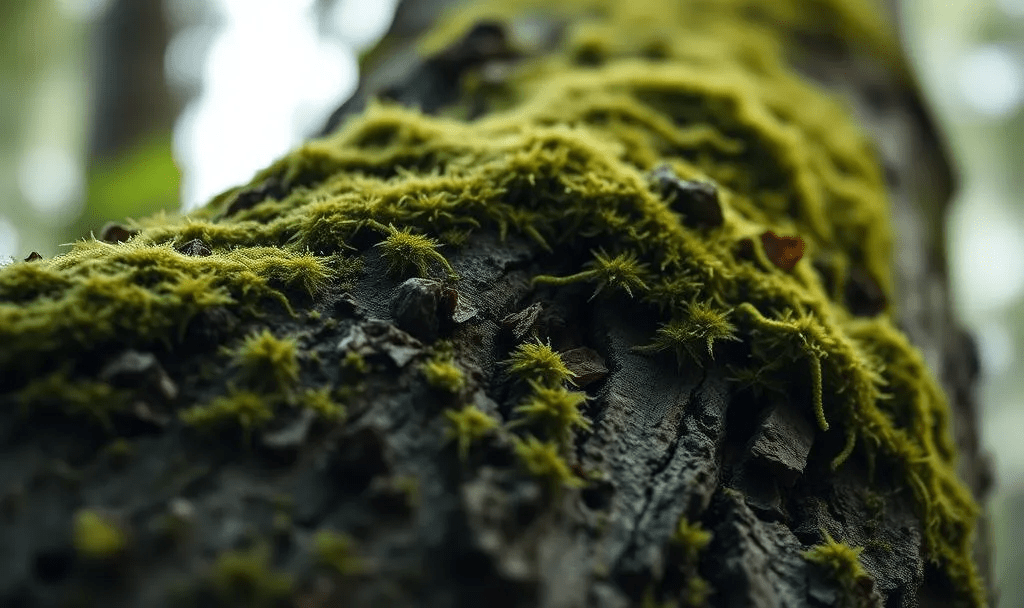
Moss has no flashy petals, no towering stems, no fragrance to lure you close. But once you start noticing it—curling over stones, softening the bark of old trees, thriving in the forgotten corners of forests—it’s hard to unsee.

I first started paying attention to moss during a walk in the woods after a therapy session. I was hollowed out, emotionally cracked open, trying to make sense of how to live in a world that hadn’t always been kind to me. The trees didn’t say much that day. But the moss? The moss felt like it had something to say.

Moss thrives where other things can’t.In the natural world, moss is one of the oldest forms of plant life—resilient, humble, and quietly persistent. It doesn’t need deep roots. It doesn’t require perfect conditions. It survives where others can’t: on rocks, in shade, and with very little nourishment.

There’s something deeply comforting about that.

I think about the parts of me that survived the hard years—not because they were strong in the traditional sense, but because they learned how to stay soft. The parts that clung to scraps of kindness, that made something green from very little. That’s moss energy. It’s not about pushing through. It’s about adapting, absorbing, and continuing.

Moss is often overlooked. People step on it. Brush it aside. Sometimes we do that to ourselves, too. Especially when we don’t fit the mold of what strength is supposed to look like—loud, busy, linear, ambitious.

But moss reminds me that there’s power in softness. Power in choosing quiet. In being the one who holds the emotional texture of a room without demanding to be the center of it.

If you’ve ever felt like the background friend, the one who supports while others shine—know that moss is like you. And the forest wouldn’t be the same without it.

There’s a therapeutic lesson in moss care: it teaches presence. Moss doesn’t grow quickly. It doesn’t chase sunlight. It teaches you to slow down. To notice dampness. Texture. The way light moves through the trees.

Lately, I’ve been trying to live more like moss—choosing rest over hustle, curiosity over control. When my nervous system starts to spike, I try to remember that the most ancient forms of life are also the most gentle. They don’t shout. They whisper. And they’re still here.

If you’re in a season where blooming feels impossible, look to moss. It doesn’t rise above. It holds tight. It makes beauty out of broken places. That, too, is survival.

Maybe the softest things aren’t weak. Maybe they’re just the wisest.

What Monstera Plants Taught Me About Growing New Relationships

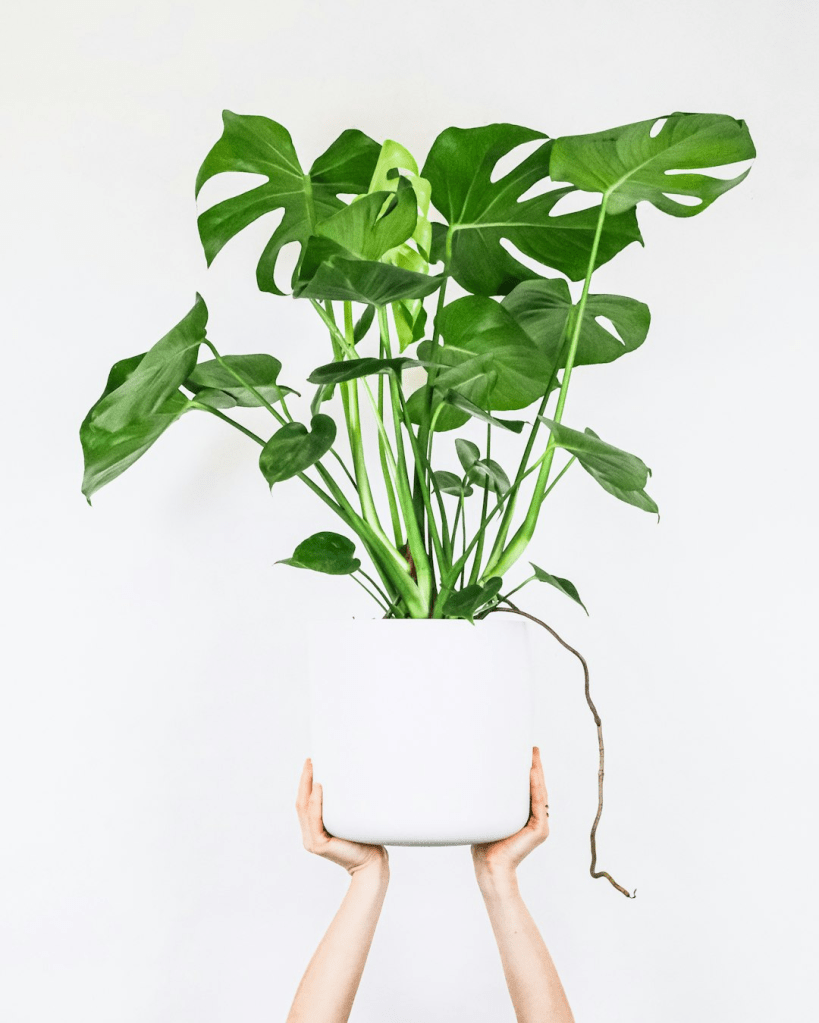
When I first brought home my monstera plant, it was a droopy little thing—two leaves, both torn, and brown edges. I almost didn’t buy it., but something about its resilience tugged at me. The split leaves, the way it reached for light even in a dark corner, felt familiar. I was in a fragile place too—recovering from old wounds, trying to build a new life, and cautiously opening myself to new people.

I didn’t know it then, but that plant would become a mirror for how I approach emotional growth and healthy relationships.

Monstera plant care is all about trust. It’s less about perfection and more about patience. They don’t bloom overnight. They need space, consistency, and time to root before they unfurl. Just like people.

When I first met my husband, I felt myself curling inward like a leaf avoiding too much light. I didn’t know how to be safe in something that felt so gentle. He was kind, present, not pushy. But I kept expecting him to turn. To leave. To prove me right.

He didn’t.

He watered slowly—time, eye contact, small acts of care. No loud declarations, no pressure to be anything but where we were.

That’s the thing about monstera deliciosa: they don’t grow because you force them. They grow because the environment is right.

Emotional growth isn’t linear and neither is a monstera. People love them for their dramatic split leaves; those holes that look like little windows. But those don’t show up until the plant is mature. Young plants have plain, heart-shaped leaves. You have to wait for the drama.

In new relationships, especially when you come from trauma, it’s tempting to rush to meaning. To want someone to see you, understand your history, meet every need before you’ve even named them yourself. I’ve done that and when people couldn’t hold it all, I’d take it as proof that connection wasn’t safe.

But like a monstera, emotional growth needs gentleness.

It took time before I let my husband into the messier layers of me—my hypervigilance, my past, the way I flinch when someone unexpectedly comes up behind me. And to his credit, he didn’t push. He just stayed. He made it safe enough for me to start unfolding.

The holes and slits didn’t come all at once. But they came.

Healthy relationships need the right light. A monstera grows best in bright, indirect light. Too much sun, and the leaves scorch. Too little, and they droop. That balance—between closeness and space—is everything.

It’s the same with people. New relationships need room to breathe. We can’t expect deep intimacy without emotional sunlight, but we also can’t force connection before it’s ready. There’s a rhythm to it. A seasonal pace.

My husband gave me that balance. And over time, I learned to give it back.

If you’re navigating new connections—romantic, platonic, or even with yourself—consider the wisdom of monstera plant care. Be patient. Let the roots settle. Allow light in, but don’t flood the soil.

Growth takes time. But when it comes, it’s beautiful. Holes and all.

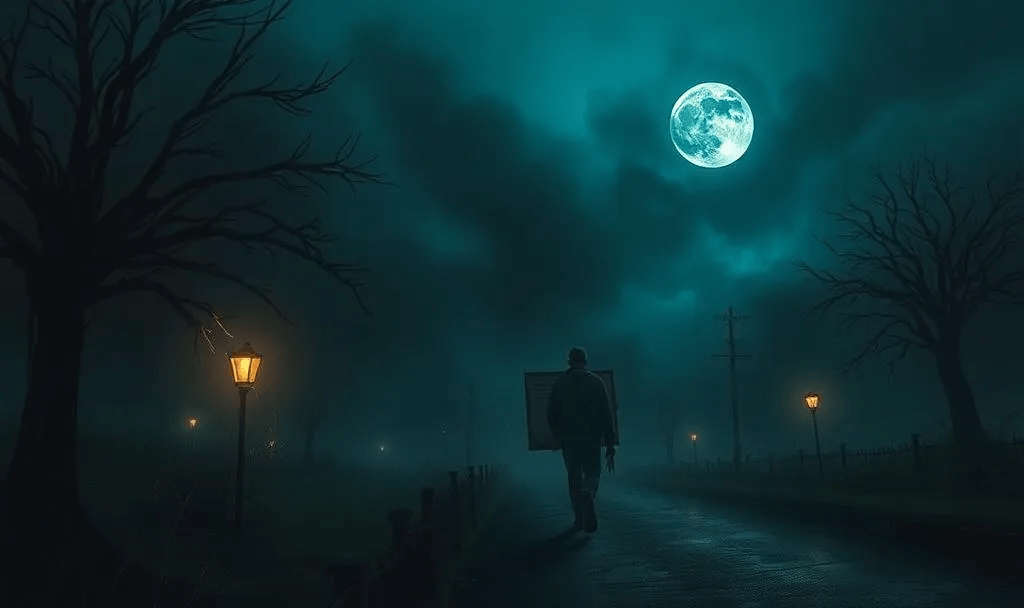
The Dark Waters of the Mind: How Nightmares Mirror the Element of Water

Nightmares have haunted human sleep since the beginning of time. While they may seem like senseless, terrifying disruptions, these nocturnal episodes often hold deep symbolic meaning. One powerful lens through which to understand nightmares is by examining their connection to the natural element of water—an ancient, shape-shifting force that reflects our unconscious mind.

Water, by nature, is emotional, elusive, and deeply symbolic. It cleanses and destroys, gives life and threatens to drown it. Likewise, nightmares can be both cathartic and terrifying, often arising from the depths of our subconscious to signal something unresolved. They may manifest as drowning, tidal waves, murky lakes, or rainstorms—each carrying its own psychological weight. But even beyond the dream content itself, water as an element offers a profound metaphor for the nightmare experience.

Nightmares tend to surge during periods of high emotional intensity—grief, anxiety, trauma, or major life changes. In the same way a flood breaks the levees, nightmares break through the barriers of our waking defenses. Just as water overflows when a container is too full, the psyche releases excess emotional pressure through dreams. Nightmares aren’t random—they are the emotional floodwaters of the mind, seeking release when we can no longer contain our feelings by day.

In Jungian psychology, water is often seen as a symbol of the unconscious. When it appears in dreams—especially as turbulent, overwhelming, or threatening—it can suggest that powerful emotional material is trying to surface. Nightmares can be seen as the soul’s attempt to purge or process these deep inner currents.

On the surface, nightmares seem chaotic, but beneath them lie meaningful patterns. Calm water might look harmless until a riptide pulls you under. Nightmares often work the same way—they may begin with a familiar setting, only to twist suddenly into something frightening. That shift mirrors the deceptive calm of our waking lives when, under the surface, trauma or anxiety is silently churning.

Recurring nightmares are like a warning buoy bobbing in open sea—something wants your attention. Whether you’re dreaming of being chased, trapped underwater, or watching a tsunami rise in the distance, the metaphor often points toward emotional overwhelm, unresolved memories, or fears too long ignored.

Though water can devastate, it also transforms. Rivers erode rock. Rain nourishes. The ocean holds mystery but also rhythm and renewal. Similarly, nightmares—though painful—can catalyze healing. They can guide us to repressed truths or highlight patterns we’re avoiding. When faced consciously, nightmares become messengers rather than enemies.

Therapists often encourage clients to record nightmares and work with the imagery, asking: What is the water trying to show me? What’s beneath the surface? Approaching nightmares with curiosity rather than fear allows the psyche to integrate the message. Just as facing the ocean teaches respect and caution, facing our inner waters can offer profound self-understanding.

Water connects all living things. It moves through rivers, clouds, and veins. It remembers. Similarly, some nightmares feel older than our personal lives—dreams of drowning, being pulled by unseen hands, or finding yourself lost at sea. These may speak to ancestral trauma, collective fear, or generational memory.

Carl Jung believed water in dreams often symbolized the collective unconscious—a shared psychic reservoir of human experience. Nightmares from this realm may not make immediate sense, but they often carry archetypal imagery that taps into primal fears. In this way, water becomes not just a personal symbol, but a bridge to a larger, more mysterious truth.

So how do we calm the waters of the mind? Grounding practices like journaling, meditation, breath work, and therapy can help bring awareness to what’s stirring beneath the surface. Keeping a dream journal by the bed creates space for the nightmares to land—to be seen, understood, and softened.

Remember: water doesn’t respond to force. It responds to presence. The same is true for nightmares. When met with patience and attention, they begin to shift. Sometimes the waves crash harder before they recede—but eventually, clarity comes. The storm passes. And the water, once feared, becomes a mirror.

Nightmares, like water, reflect our emotional landscape. They are neither punishment nor prophecy, but a natural response to the turbulence we carry within. By viewing nightmares through the lens of water—fluid, reflective, and deep—we gain a more compassionate understanding of their purpose. They are not here to drown us. They are here to cleanse, reveal, and transform.

When Storms Reflect the Soul: How Weather Mirrors Human Emotion

There’s something sacred about watching a storm roll in. The way the wind rises in quiet threat, the hush that falls over the trees like nature itself is holding its breath. Clouds thicken, darken, and suddenly, the air feels heavy—like it’s been holding too much for too long. And then, with no more warning than a flicker of light across the sky, it breaks. Rain crashes, thunder growls from deep in the earth, and everything that was once restrained is now in motion. Unapologetic. Unfiltered.

That’s what emotion feels like in a human body.

We live most of our lives trying to be the calm before the storm. Tidy. Controlled. Palatable. We smile when we ache. We push through when we should rest. We nod when we want to scream. But underneath, the clouds are gathering. Whether we acknowledge them or not, they are always forming—thick with memory, tension, grief, longing. The weight builds, until one day we crack. And like the sky, we break wide open.

I’ve come to believe that storms don’t destroy us—they reveal us. They show us what was already there. The pain we tucked behind our productivity. The fear we stuffed into the corners of our smiles. The sadness we buried because no one ever taught us how to feel without shame. Storms don’t create chaos; they expose it. They bring it to the surface, where it can finally breathe.

The rain doesn’t ask permission to fall. It doesn’t apologize for soaking the ground. It doesn’t withhold itself to make the landscape more comfortable. And maybe neither should we. Maybe our tears are as holy as the downpour that cleanses the dust from the world. Maybe our anger—when rooted in injustice or protection—is thunder finding its voice. And maybe the winds of our grief, though strong enough to bend us, are only trying to show us where we’ve been rooted too long in soil that can no longer hold us.

Some of us are afraid of our inner storms. We were taught that emotion is something to tame, to manage, to keep quiet. But that’s a dangerous lie because emotion doesn’t vanish when ignored—it transforms. Into illness. Into addiction. Into sharpness in the voice or silence at the dinner table. It becomes a quiet storm that lives in the body, waiting.

And yet, storms always pass. That’s their promise.

They are intense, yes. Unrelenting at times. But never eternal. The sky never stays black. The rain never falls forever. There’s always a moment—quiet, almost imperceptible—when the thunder fades, and the light returns. The air smells different, like something has been released. The leaves glisten. The Earth breathes.

Human emotion is no different. We were built to feel deeply and survive it. We were built to weather the inner hurricanes and still rise the next day. There’s something deeply redemptive about honoring your own storm—about letting it roll through you without resistance. Because on the other side of it, clarity waits. Clean air. Sunlight. A softer heart.

Sometimes I wonder if the purpose of pain isn’t to ruin us, but to reshape us. To wash away what no longer serves us. To remind us of our humanness. Because if we never felt the downpour, how would we ever appreciate the stillness that follows?

You are allowed to be your own storm. You are allowed to feel big, messy, overwhelming things and not apologize for them. You are allowed to be loud in your grief and tender in your anger. You are allowed to let the clouds gather and not fear the sound of your own thunder.

Because feeling isn’t a failure. It’s a forecast. It tells you what’s coming, what’s changing, and what needs your attention. And if you let it, it will also show you the way home.

The Ones That Lived: On Neglect, Healing, and the Mystery of Resilience

If you’re in a season of stillness or softness, this one’s for you.

I own fifty houseplants. Not a typo. Fifty. They surround my windowsills and bookshelves, drink in the light that trickles through the blinds, and lean toward the world like they want something from it. They’ve been my quiet companions for years—green things I could nurture when I didn’t know how to nurture myself.

And then I stopped.

Five months ago, I had foot surgery. The kind that takes something out of you, and then keeps taking. I didn’t mean to neglect them. But one week turned into three. My succulents went a full season without water. Not even a glance. I didn’t mist, prune, repot, or rotate. I barely moved.

And yet… they’re alive. Not just clinging on, but thriving.

I keep walking past them like they’re a miracle I don’t quite believe in. The Peace Lily and Anthuriums bloomed. The Pothos are cascading like they’re auditioning for a catalog. Even the Fiddle-Leaf Fig—which used to drop a leaf in protest every time I breathed near it—has put out new growth.

It doesn’t make sense. But also, it does.

Plants are built for drought. And maybe, in some quiet way, so am I.

Here’s what I’ve learned since:

Some of my plants went dormant. That’s what they do in winter. They slow down and conserve energy. They look like they’re doing nothing at all, but underground, there’s a soft, invisible kind of resilience. They’re waiting for better light. Not panicking. Not performing. Just being.

Some are hardy by nature—the plants with thick leaves and thick skin are built for long stretches without rain. They’ve adapted to scarcity. They know how to hold on when nothing good is coming in.

My plants had deep enough roots to survive because I’d cared for them well before the silence. They had reserves. They trusted the soil. They knew what it was like to be fed—and they held on until I could return.

And yes, maybe I got lucky. Maybe the light stayed steady, the temperatures didn’t swing, and the pests didn’t find their way in. But there’s more to it than odds.

There’s something here I needed to see.

Survival isn’t always a sign of perfect care. Sometimes it’s a sign of deep, ancestral wisdom.

These plants—my fifty green mirrors—didn’t need constant tending. They just needed enough. And maybe that’s a truth I’ve forgotten in my own healing. Thriving doesn’t always look like doing everything right. Sometimes resting is the most powerful thing you can do.

I thought they would die without me. I thought everything would fall apart the moment I let go. I didn’t even care honestly. I was more focused on my own pain. But they didn’t. And neither did I.

This isn’t a metaphor I was trying to write. But here it is anyway:

I think about the parts of me I’ve left alone lately. The inner places I haven’t watered. The parts I was afraid might wither if I stopped showing up perfectly. But healing—real healing—isn’t manicured. It’s not a checklist. It’s a season. A dormancy. A rooting deeper into the self.

I’ve been growing this whole time, even if I didn’t see it.

And maybe you have, too.

Maybe you’ve come through something lately—a loss, a reckoning, a long dark hallway of uncertainty. Maybe you feel behind, or brittle, or overdue for care. Maybe you think your neglect is the end of things.

But maybe it isn’t.

Maybe the bloom will come anyway.

Maybe the roots held on for you.

Maybe you are more resilient than you realized.

So here’s to the ones that lived.

To the ones that didn’t get everything they needed, but made it anyway. To the ones that went quiet and kept breathing. To the ones that waited for the light to change.

To the part of you that’s still reaching, even now.

Rooted and Uprooted: What Trees Teach Us About Human Change

There’s a skinny Beech tree about 10 feet tall outside my window that I hastily transplanted last night. I dug it up from a shaded patch of woods surrounded by 70 foot mature Maple and Oak trees. It was at my property that’s 15 minutes away from my house.

My husband got Persimmon tree starters from a neighbor and he wanted to plant a grove at the property. I saw the established Beech tree and knew I had to have it in our backyard. We built a house two years ago and there are no mature trees, which hurts my nature-loving heart.

My dad worked in the veneer industry and I spent my life observing trees. It’s my safe place, my home. He taught me that the root ball is the most important part of digging up a tree if you want it to survive. He taught me that you should dig up a new tree with a diameter of at least three to five feet in order to preserve the root ball. Well, the Spring sun was getting ready to set in an hour and my husband wanted to test out his new boomerang that his sister brought home from Australia.

Since the tree cost nothing and we have hundreds of them, I told him to dig it up quickly, so we only dug a one to two foot root ball. My dad was probably rolling over in his grave.

We got on the four wheeler hauling our ten foot tree and threw it in the pond so the roots didn’t dry out until we were ready to leave after his failed attempts at getting the boomerang to circle back.

We rushed home and immediately dug the hole. It was pure clay, which isn’t good. We dug it up from a sandy, loamy soil. Tree roots need air pockets to survive. I pushed it into the ground and smothered it in the clay, watering it with a rooting hormone. So much of me feels like it won’t take, but I will try everything to get it to survive because if I love something enough it will work out, right?

It looks beautiful in the morning light, but the leaves look droopy upon closer inspection. My heart sunk. That image won’t leave me because I’ve felt like that tree—cut off from what was familiar, stunned by the cold air of change, and unsure whether I’d survive the move.

Transplanting, whether of trees or of people, isn’t just a moment. It’s a season. One full of pain, patience, and quiet becoming.

As trees prepare for transplant, change begins long before the move. A tree must be pruned and roots partially loosened. The timing must be right—the soil prepared. You don’t just rip something out of the ground and expect it to thrive.

We’re the same. We know when something no longer fits—a relationship, a job, a version of ourselves—but leaving takes more than awareness. It takes readiness. When we rush, we tear something vital. When we delay too long, we risk shrinking in place. The body knows when it’s time and learning to listen is part of the work.

Even in perfect conditions, a tree experiences shock because of the root disturbance. It stops absorbing nutrients. It drops leaves. From the outside, it looks like it’s dying.

So do we.

When we leave the known behind, even for something better, we often fall apart before we rebuild. There’s grief, guilt, and that whisper of, “Maybe I made a mistake.” But that isn’t failure. It’s a natural part of the process. The old roots have been severed. The new ones aren’t established yet. It’s okay to feel lost in between.

Replanting requires the right soil. Where the tree lands matters. It needs sunlight, good drainage, and protection from wind. Without the right conditions, the transplant won’t take. I made all of those mistakes with my new Beech tree because I had no time or patience. I thought I could wing it on a hope and a prayer.

Humans need nourishing environments, too. Safe people. Quiet mornings. Gentle structure. You don’t owe anyone speed. You don’t need to prove your worth by blooming fast. Healing asks for presence, not performance.

Adaptation happens underground. For a while, nothing seems to happen. The branches stay bare. The growth is invisible. But underground, the roots are reaching, rebuilding, and testing the new soil.

We live this too. We think we’re stuck, but really we’re re-rooting. What looks like stillness is often transformation in disguise.

Eventually, if conditions are right, the tree adapts and thrives in it’s new location. The roots grow deeper. The trunk grows stronger. The stress of the move becomes a memory as the bloom returns.

And maybe, in time, you will feel that too—that this new place was not just an escape, but an arrival. You will feel that you are not just surviving, but thriving and that you’re not who you were before the transplant happened.

If you’re in a season of uprooting, know this: there is nothing wrong with you. This discomfort is not a mistake. It’s your system adjusting. Keep resting. Keep reaching. Let the roots take hold.

The bloom will come.

The Pains of Patience

I’m in my mid-thirties and still haven’t figured my career out. I got my Master’s Degree in something I didn’t like. After a trip out west and two years of soul searching, I found my dream career taking care of plants, only to become diagnosed with an autoimmune disorder that prevents me from working full time in the industry. I have had to constantly pivot. It’s destabilizing. Not having a steady income can bring out feelings of utter worthlessness and embarrassment, especially at my age.

I finally figured out my new career path as a yoga instructor. I found a studio that I loved and found out when they were offering their certification program, excited to hear the beginning of January. I shared my excitement with friends and family at holiday parties.

Then life happened.

I sprained my right foot. I can’t drive or put weight on it for a month, then we have to reevaluate from there. I am three weeks in, so the yoga program must be put on hold. My doctor did not approve my program. This puts me back 6-12 months! I was crushed.

What am I going to do? I have a bum foot that can’t withstand anything and I can’t drive, so I sit on the couch all day alone. I simmer in resentment and fury. I have been getting lost in self-pity.

But then I’ll sit on the porch and breathe in the crispy clean, winter air. I sit in silence and look at the bare trees. They don’t look pretty. They don’t provide much shade or protection. They’re not sustaining a ton of wildlife right now.

However – I stare at them in awe.

I know how beautiful and helpful they’ll be in the spring. I know they’ll provide much needed shade for me in the summer heat. I know they’ll put on a magnificent show of oranges and reds in the fall. I know they’ll lay witness to hundred of births of baby birds. Fruit and purpose are right around the corner for the trees. They need time to reset.

So I’ll take the advice of the trees that have outlived my ancestors. I’ll follow their wise advice and practice patience in this time of darkness and uncertainty. I know I’ll bloom again when I’m meant to.

Do Flowers Have Feelings?

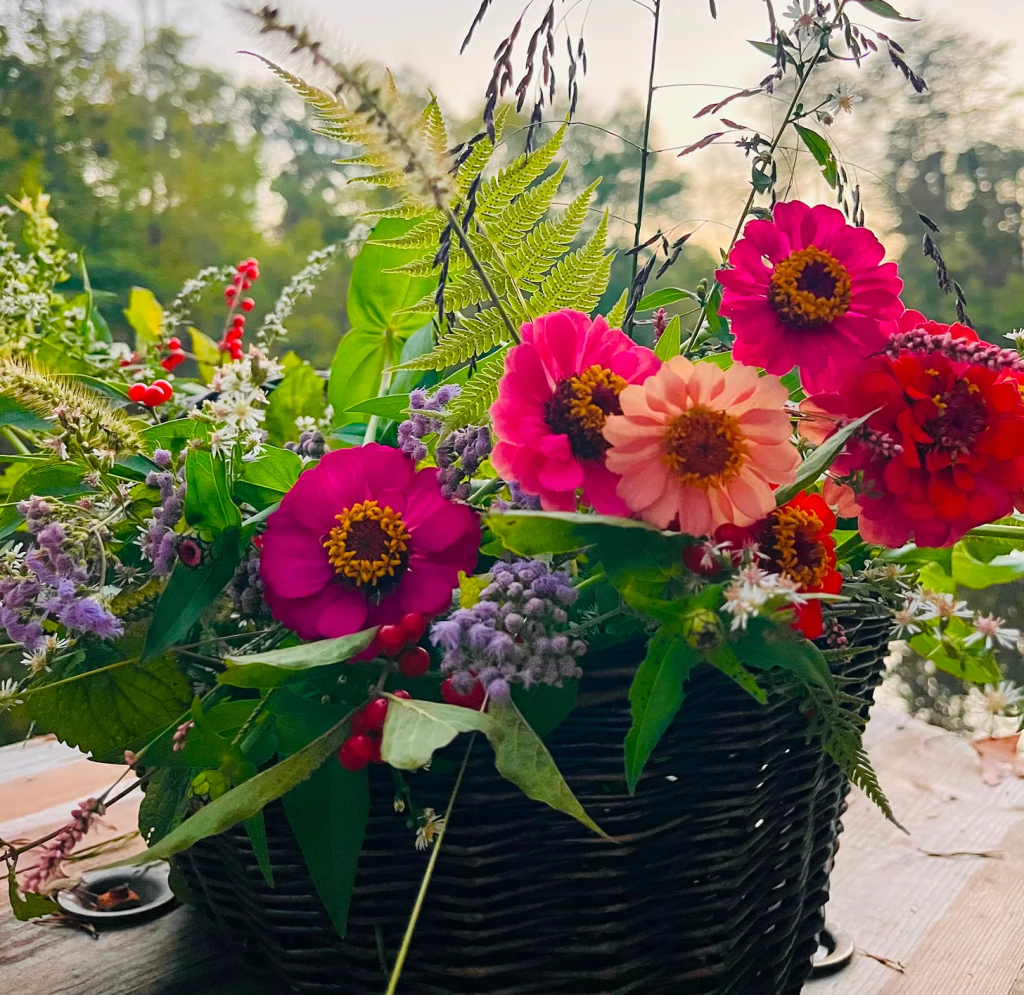
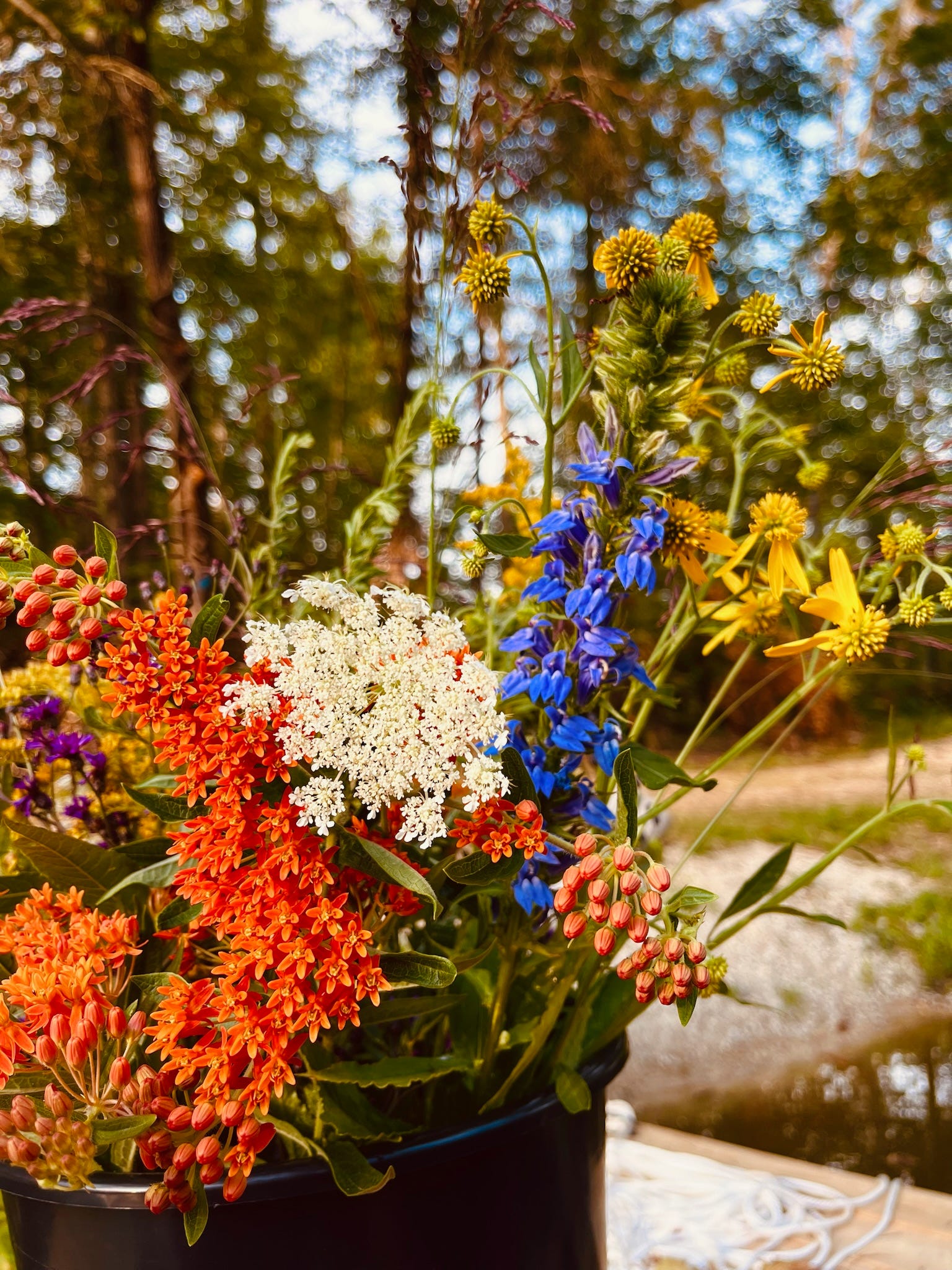
This basket of flowers was harvested from my own land. I had unlimited textures and colors to choose from. I picked grasses, flowers, berries, ferns, and ground cover. It was all free! The land hardly noticed I clipped anything. The bees kept gathering nectar below me, knowing I wasn’t threatening their food source. The bouquet turned out gorgeous! I would have easily had to pay over $100 for it at a Florist’s shop.

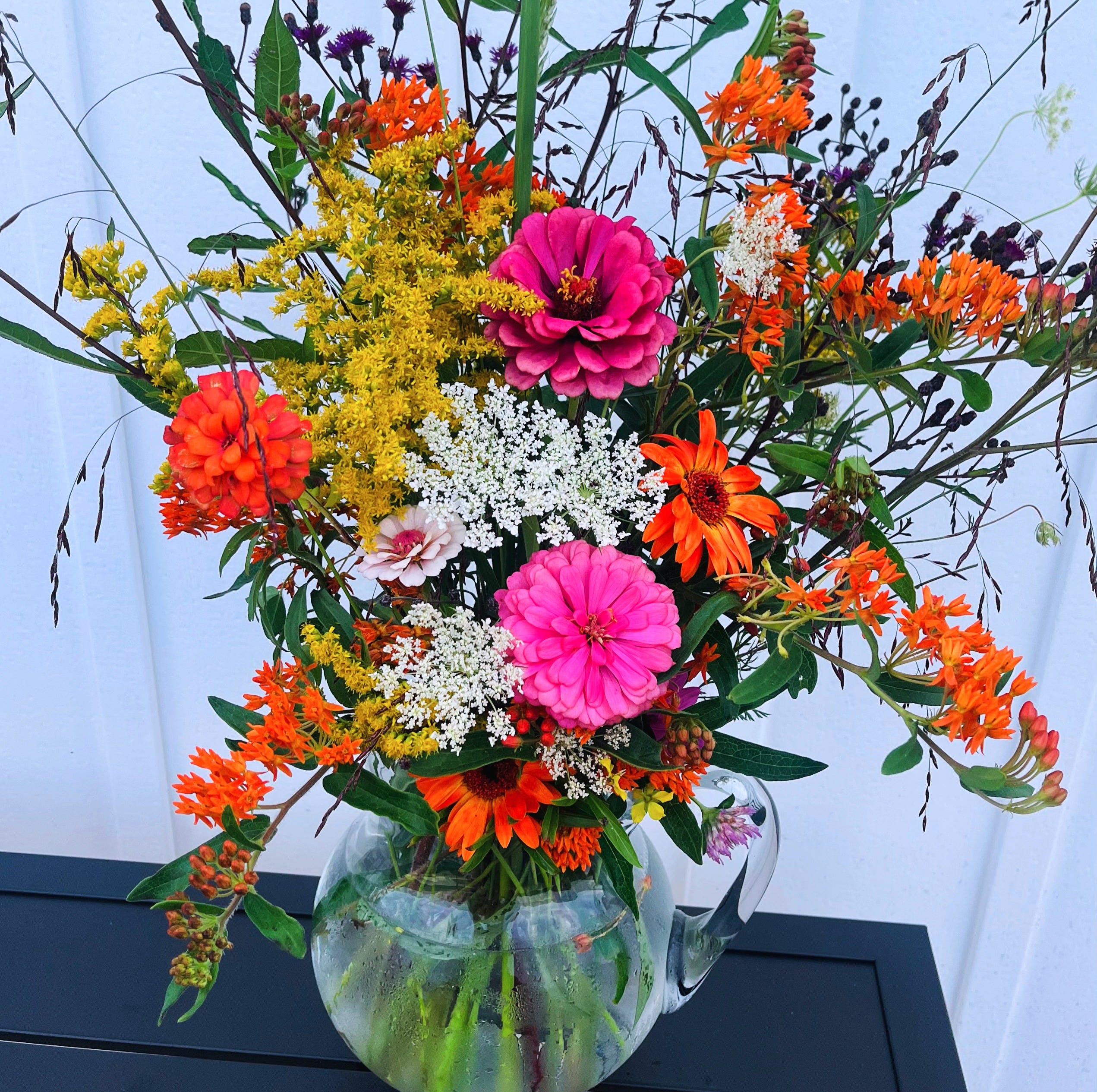
Another funky, free arrangement!

But do you see how I have to keep them outside on my porch? I do not use pesticides, and flowers come with tons of bugs. I don’t dare bring them inside because the pests will certainly take over my home and extensive houseplant collection. My wild bouquets didn’t last as long in the summer heat as they would indoors, but they made me just as happy. I changed the water every other day and would get at least a week out them, as opposed to the two or three weeks I would get from the pesticide ridden florist flowers.

I was employed as a Florist for four months. It was eye opening. It is not a sustainable or eco-friendly industry. The amount of chemicals and plastic waste that goes into it is sickening! I could not ethically work there – for the planet or my own health.

I also noticed a personality difference between the flowers. Could it be my own projection? Absolutely. But could it be real? Possibly…

There’s something primal about harvesting wildflowers. I never felt bad cutting stems because I left 200+ others in the field. I knew the others were going to continue supporting the ecosystem and that nature was happy to provide me with a beautiful bouquet for a week.

August Finds 2024

At the floral shop, the flowers I would receive in cardboard boxes from a Continent away seemed devoid of life or character. They are shipped in thin plastic buckets with minimal water to prevent spillage. The bucket is then placed inside of a plastic trash bag to prevent the inevitable spilt chemical water from ruining the cardboard shipping box. Then they are taped up and slapped with plastic straps on pallets. It was an ordeal to unload each box! I would get around 75+ boxes each week.

A lot of them are moldy from the dark, damp unpredictable shipping environments. Most come in dehydrated and sad looking. But what can we expect? I live in Midwest USA and our supplier shipped from Ecuador and Columbia.

Can you imagine growing strong in sunshine-filled fields on your mother plant in South America then being shrouded and crammed into dark, damp boxes for FOUR DAYS, then expected to live in who knows what kind of environment for two more weeks?

The longer I was in the industry, the more painful it became for me. My wildflowers that grow naturally are treated with respect and reverence. I don’t rush to cut them and they never travel more than ten miles back to my house. Each time I look at my personal arrangement, I picture the exact location I picked it from…a smile naturally forming on my lips. When they die, I throw them on my compost pile and they become useful to the Earth again. There is no waste in wildflower picking.

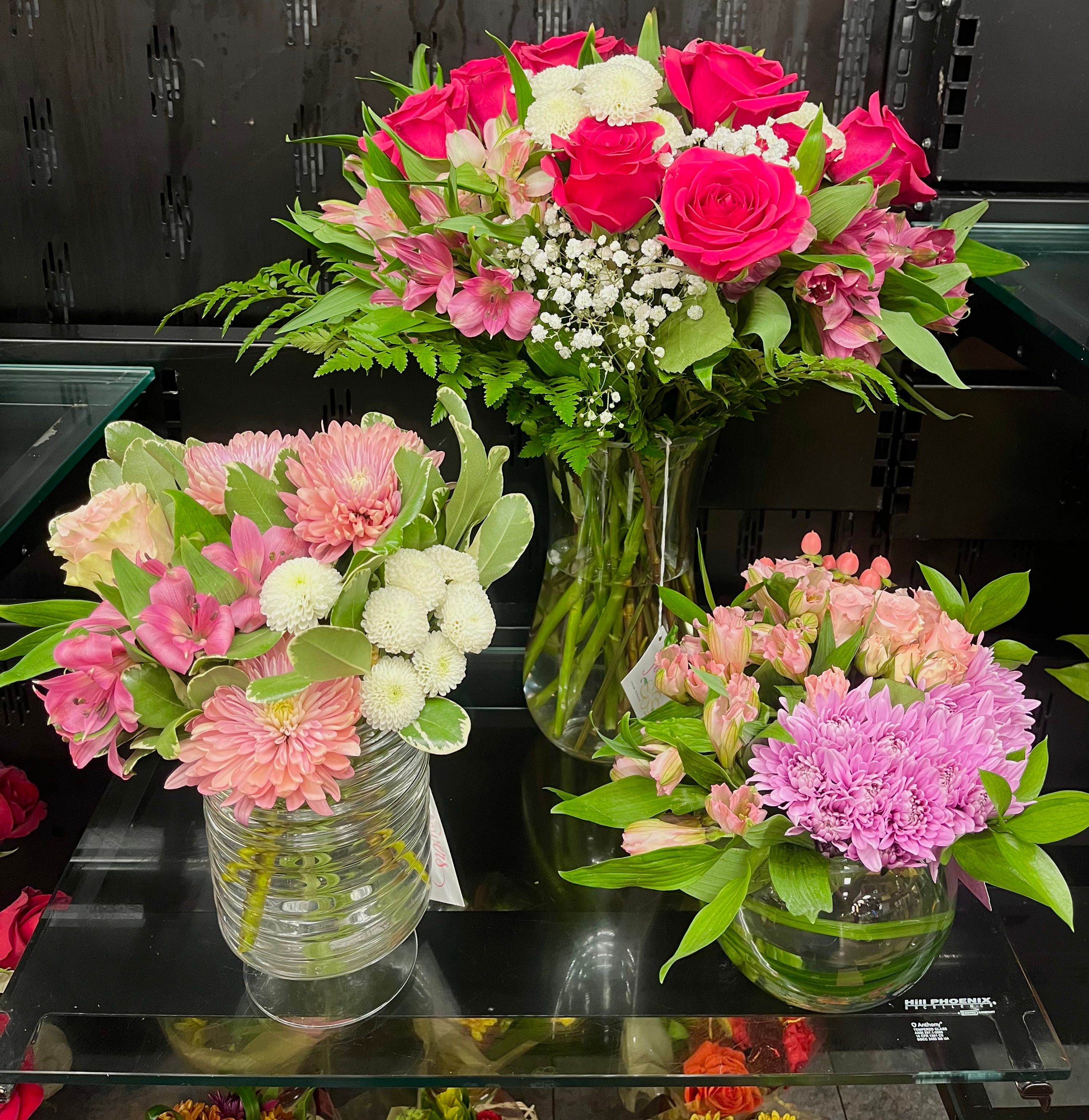
Florist Shop

However – not everyone has access to acres of wildflowers, or the ability to form an aesthetically pleasing bouquet (it’s so much harder than it looks). Special events don’t seem complete or luxurious without flowers. There’s no better feeling than getting fresh flowers in times of celebration, grieving, or “just because.” It’s a timeless tradition that aims to bring nature into our lives to remind us that life is worth living, we’re not alone, and that Mother Earth will provide for us. She compliments our sterile homes and offices with her wild beauty and fragrant blooms.

Maybe we’ve become too advanced as a society? If you think about the logistics of it all, the floral industry is impressive. I was able to receive fresh flowers in Midwest USA that were cut in South America 2-4 days before. That’s insane! We should feel proud of our technological advances. It used to take days to travel one state on horseback 200 years ago. Now we can fly 3,000 miles in less than six hours.

But just because we *can* doesn’t mean we *should.* Maybe it’s time to take a step back and listen to the Earth? She is screaming in pain. We are overusing and abusing her resources. She can’t handle our pace. She deserves respect and rest too.

I think the world would become a much healthier place if we realized all living things have feelings. I don’t think flowers have the complex emotions we do, but I do think the environment does as a whole. When massive fields are being abused for one specific crop/flower, they deteriorate. Nutrients are depleted from the soil; soil erosion then becomes an issue, which continues on in a domino effect.

What’s something you’ve noticed that has been taken advantage of because of technological advances and is contributing to the deterioration of the Earth?

Three Glass Bowls of Inequality

It was a clear summer morning and there wasn’t a cloud in the sky. Families were pouring out of their cars in droves, excited to finally send off their 18-year-old adult children to The Great Unknown. It is the most sacred tradition this community has upheld for centuries.

There’s an altar at the edge of a precipice, high up on their mountain. The 18-year-old will sit in between their parents, dead or alive, and all three of them will silently reflect on the life of the child. Once the altar has a sense of the life that was provided, a glass bowl will magically appear. This bowl is to be displayed near the front door of every home they inhabit. It stands as a visual reminder of the childhood the host has been provided with.

There was a beautiful girl, anxiously awaiting her turn. Her mom had tears of happiness and pride filling her eyes. She couldn’t believe her daughter was already old enough to venture into The Great Unknown. Raising her daughter at home full time was the biggest blessing of her life. She held hands with her daughter in line, exchanging excited grins. The dad stood stoically next to them, reminiscing on all of the lessons he and his family tried to teach the daughter. He hoped she would be presented with a beautiful bowl, but knew that whatever one she got, his daughter would proudly display.

As they sat quietly at the altar, a beautiful bowl appeared rather quickly. It was perfect! It was devoid of any cracks or imperfections. There were no chips or stains. The daughter smiled, thanked the altar, and accepted her bowl with gratitude. She was pleased with how clear it was, knowing it would match any home decor design she could ever choose.

Next up was a tall, skinny young man with acne littering his face. His mother looked very old and frail. He had to push her in her wheelchair to the altar. She looked exhausted by the whole ordeal. Her son never showed any signs of bitterness or resentment. As he settled in beside her in front of the altar, a man appeared next to them. The young man had goosebumps all over his skin. He didn’t even look over to see the spirit of his father who died when he was young. They all sat in total silence, heads bowed.

It seemed like the altar had a hard time distinguishing his life. It presented him with half of a bowl, then four large glass pieces and a shimmery gold liquid to bind it together. The dad disappeared into thin air, and the mother lovingly explained how to use to gold liquid to create a strong bowl. It took him a while to finish, but everyone cheered him on. As he walked away pushing the wheelchair, his mom proudly clung to the bowl smiling ear-to-ear. People kept complimenting the unique bowl.

As they said their goodbyes, she kissed him in between the eyes like she used to when he was a baby. She said, “Son, I am sorry for all the ways in which I ever let you down. You deserved a better father, home, and clothes. I wish I could have given you the perfect life…a life in which your heart never broke.”

The tall son got down on one knee so he was face to face with his mother. He took his hands and enveloped her small face in them, kissing her sweetly right between the eyes, like he did when he was a toddler. “Don’t ever apologize. You did the best you could with what you had, with little help from dad or the community. My life has been complex, but I always knew you had my back, loved me, and provided a safe place to sleep. I look at these gold imperfections with nothing but pride. I am a warrior. I want to remember every challenge you brought me through. We always made it to the other side, together. That’s all that matters.”

The day was coming to an end with only one young woman left on the mountain. No one knew she was there all day. She hid in the trees to avoid the sympathetic stares and empty, forced invitations to join strangers. She knew going last would eliminate any uncomfortable situations and didn’t mind waiting. She hadn’t see her dead parents in years and was quite nervous for the reunion. She was thankful for the time in the trees to gain her composure.

Her father brutally killed her mother when she was young. Then he tortured the young daughter every day of her life. He blamed the young child for the mother’s death because his conscience couldn’t handle the truth of what he did. After a few years, even the daughter believed it.

She slowly approached the altar reverently. She sat down and bowed her head, waiting to feel her parents souls appear beside her. She was shocked by how little she felt. She opened her eyes, but they weren’t there.

The altar started violently shaking and she backed away. She heard the beautiful call of a Mourning Dove, so she looked up only to see it being hunted by a hawk! She grabbed a rock to throw at the predator, but as the rock connected with the hawk, everything disappeared. The altar was gone. The birds were gone. She was left alone standing at the precipice…with no offering bowl.

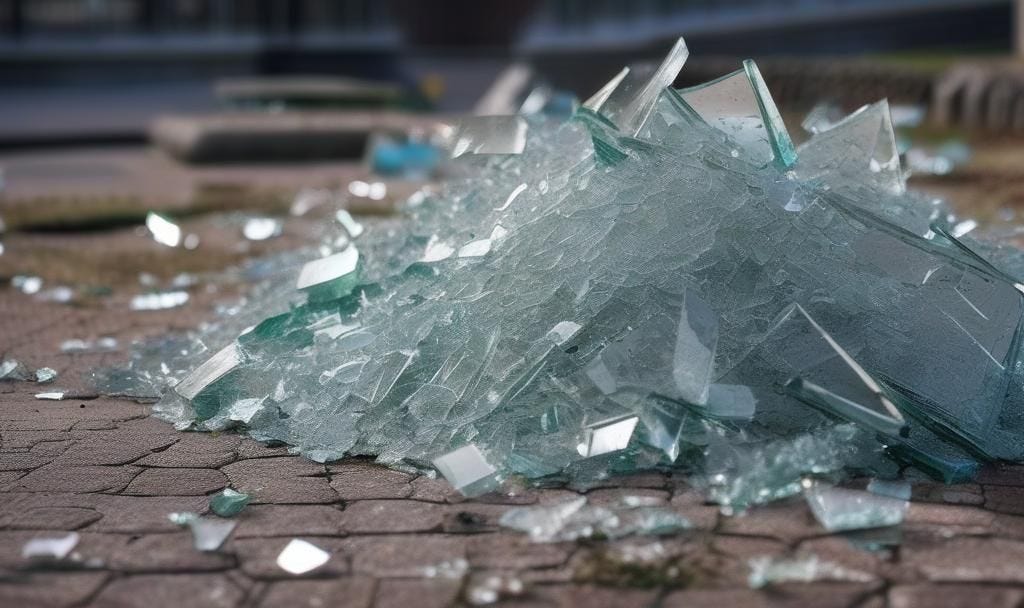
Suddenly she started getting pelted with glass shards from the sky. She ran to the trees for coverage! When glass stopped falling from the sky, the young woman slowly approached the pile. Alligator tears swarmed her eyes, but she never let them fall. She quietly opened her backpack that was stuffed with packing paper, which she intended to use to wrap her bowl with. She covered her hands with the paper as best as she could and scooped the glass shards into her backpack.

By the time she was done collecting all the pieces she could, her hands were sliced and bleeding everywhere. She tried wiping them on her shirt, but felt razor blades. She knew small glass pieces were inevitably being lodged into her skin. She zipped up her backpack, gathered some moss from the forest floor, and wrapped them in leaves.

As she ventured into The Great Unknown, she wondered how long it would take her to build a bowl out of the pieces. She thought to herself, does blood permanently stain glass?