What Monstera Plants Taught Me About Growing New Relationships

When I first brought home my monstera plant, it was a droopy little thing—two leaves, both torn, and brown edges. I almost didn’t buy it., but something about its resilience tugged at me. The split leaves, the way it reached for light even in a dark corner, felt familiar. I was in a fragile place too—recovering from old wounds, trying to build a new life, and cautiously opening myself to new people.

I didn’t know it then, but that plant would become a mirror for how I approach emotional growth and healthy relationships.

Monstera plant care is all about trust. It’s less about perfection and more about patience. They don’t bloom overnight. They need space, consistency, and time to root before they unfurl. Just like people.

When I first met my husband, I felt myself curling inward like a leaf avoiding too much light. I didn’t know how to be safe in something that felt so gentle. He was kind, present, not pushy. But I kept expecting him to turn. To leave. To prove me right.

He didn’t.

He watered slowly—time, eye contact, small acts of care. No loud declarations, no pressure to be anything but where we were.

That’s the thing about monstera deliciosa: they don’t grow because you force them. They grow because the environment is right.

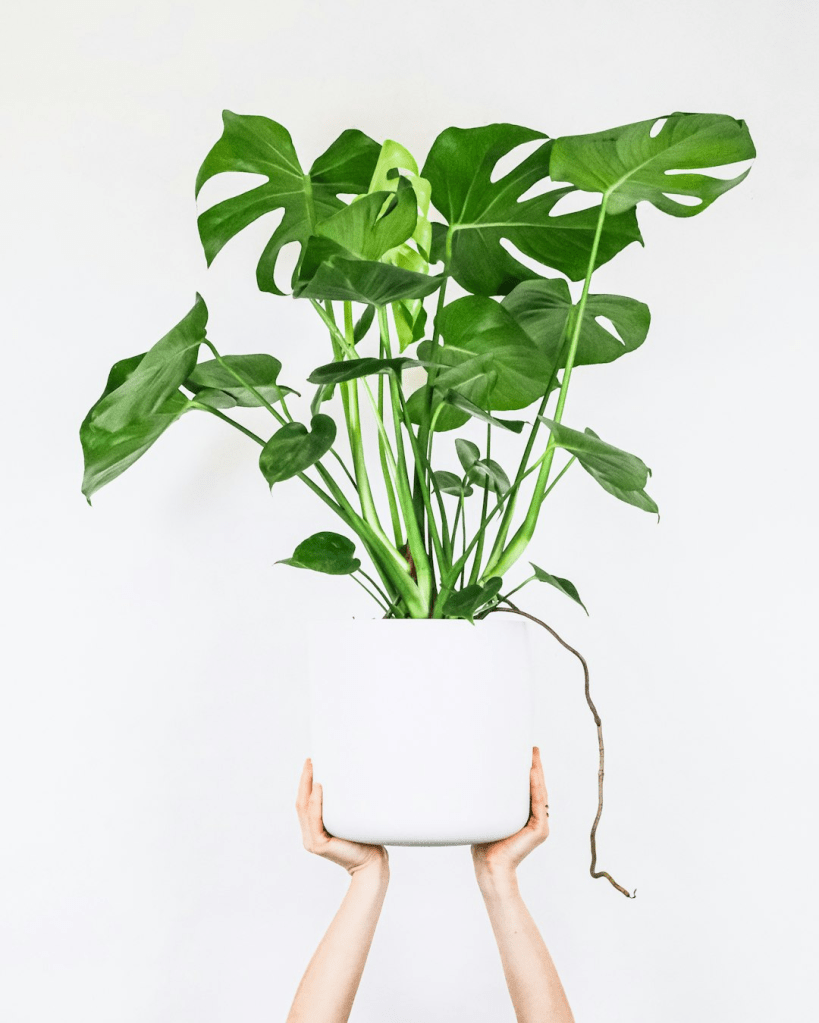
Emotional growth isn’t linear and neither is a monstera. People love them for their dramatic split leaves; those holes that look like little windows. But those don’t show up until the plant is mature. Young plants have plain, heart-shaped leaves. You have to wait for the drama.

In new relationships, especially when you come from trauma, it’s tempting to rush to meaning. To want someone to see you, understand your history, meet every need before you’ve even named them yourself. I’ve done that and when people couldn’t hold it all, I’d take it as proof that connection wasn’t safe.

But like a monstera, emotional growth needs gentleness.

It took time before I let my husband into the messier layers of me—my hypervigilance, my past, the way I flinch when someone unexpectedly comes up behind me. And to his credit, he didn’t push. He just stayed. He made it safe enough for me to start unfolding.

The holes and slits didn’t come all at once. But they came.

Healthy relationships need the right light. A monstera grows best in bright, indirect light. Too much sun, and the leaves scorch. Too little, and they droop. That balance—between closeness and space—is everything.

It’s the same with people. New relationships need room to breathe. We can’t expect deep intimacy without emotional sunlight, but we also can’t force connection before it’s ready. There’s a rhythm to it. A seasonal pace.

My husband gave me that balance. And over time, I learned to give it back.

If you’re navigating new connections—romantic, platonic, or even with yourself—consider the wisdom of monstera plant care. Be patient. Let the roots settle. Allow light in, but don’t flood the soil.

Growth takes time. But when it comes, it’s beautiful. Holes and all.

The Ones That Lived: On Neglect, Healing, and the Mystery of Resilience

If you’re in a season of stillness or softness, this one’s for you.

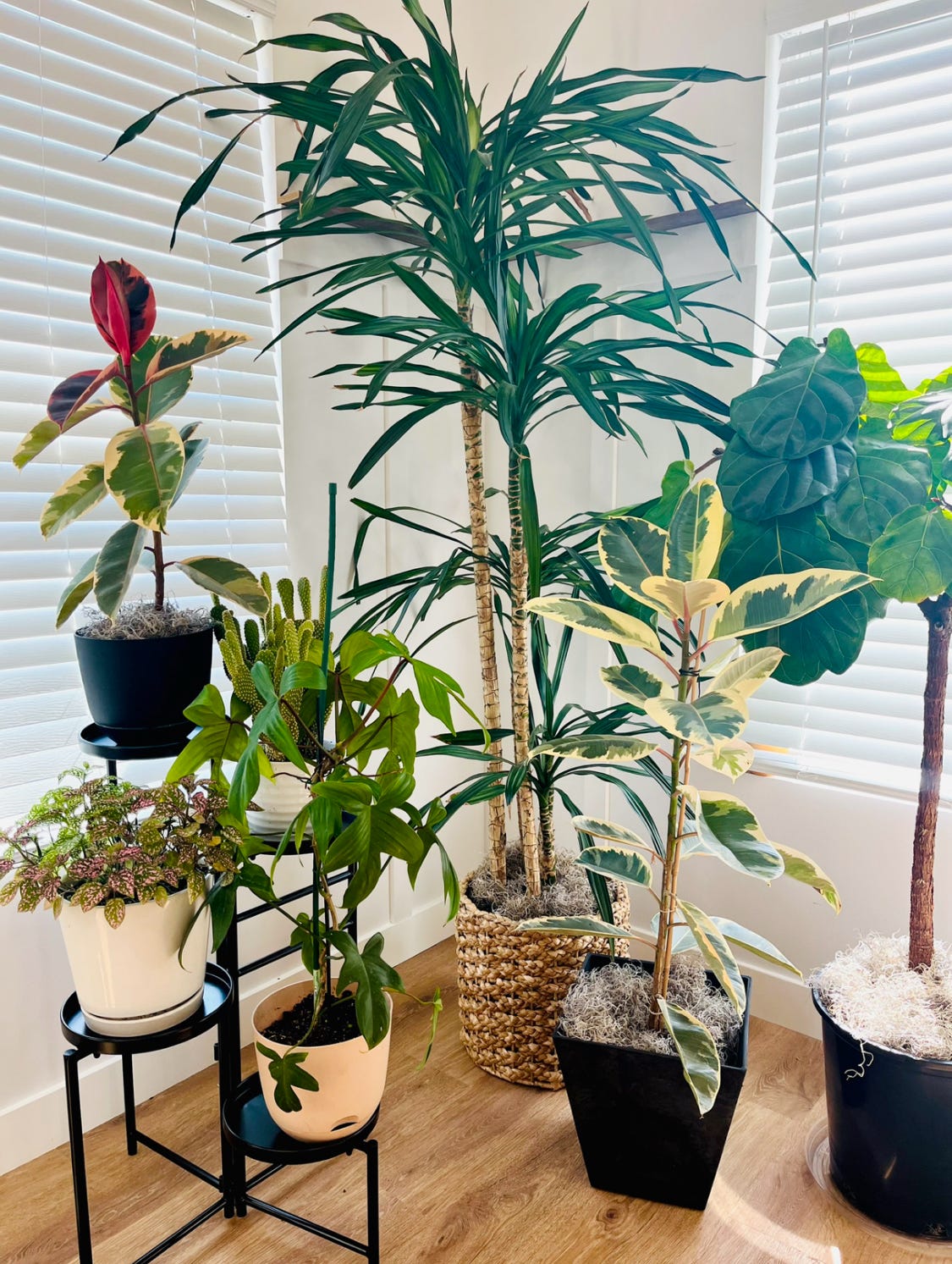
I own fifty houseplants. Not a typo. Fifty. They surround my windowsills and bookshelves, drink in the light that trickles through the blinds, and lean toward the world like they want something from it. They’ve been my quiet companions for years—green things I could nurture when I didn’t know how to nurture myself.

And then I stopped.

Five months ago, I had foot surgery. The kind that takes something out of you, and then keeps taking. I didn’t mean to neglect them. But one week turned into three. My succulents went a full season without water. Not even a glance. I didn’t mist, prune, repot, or rotate. I barely moved.

And yet… they’re alive. Not just clinging on, but thriving.

I keep walking past them like they’re a miracle I don’t quite believe in. The Peace Lily and Anthuriums bloomed. The Pothos are cascading like they’re auditioning for a catalog. Even the Fiddle-Leaf Fig—which used to drop a leaf in protest every time I breathed near it—has put out new growth.

It doesn’t make sense. But also, it does.

Plants are built for drought. And maybe, in some quiet way, so am I.

Here’s what I’ve learned since:

Some of my plants went dormant. That’s what they do in winter. They slow down and conserve energy. They look like they’re doing nothing at all, but underground, there’s a soft, invisible kind of resilience. They’re waiting for better light. Not panicking. Not performing. Just being.

Some are hardy by nature—the plants with thick leaves and thick skin are built for long stretches without rain. They’ve adapted to scarcity. They know how to hold on when nothing good is coming in.

My plants had deep enough roots to survive because I’d cared for them well before the silence. They had reserves. They trusted the soil. They knew what it was like to be fed—and they held on until I could return.

And yes, maybe I got lucky. Maybe the light stayed steady, the temperatures didn’t swing, and the pests didn’t find their way in. But there’s more to it than odds.

There’s something here I needed to see.

Survival isn’t always a sign of perfect care. Sometimes it’s a sign of deep, ancestral wisdom.

These plants—my fifty green mirrors—didn’t need constant tending. They just needed enough. And maybe that’s a truth I’ve forgotten in my own healing. Thriving doesn’t always look like doing everything right. Sometimes resting is the most powerful thing you can do.

I thought they would die without me. I thought everything would fall apart the moment I let go. I didn’t even care honestly. I was more focused on my own pain. But they didn’t. And neither did I.

This isn’t a metaphor I was trying to write. But here it is anyway:

I think about the parts of me I’ve left alone lately. The inner places I haven’t watered. The parts I was afraid might wither if I stopped showing up perfectly. But healing—real healing—isn’t manicured. It’s not a checklist. It’s a season. A dormancy. A rooting deeper into the self.

I’ve been growing this whole time, even if I didn’t see it.

And maybe you have, too.

Maybe you’ve come through something lately—a loss, a reckoning, a long dark hallway of uncertainty. Maybe you feel behind, or brittle, or overdue for care. Maybe you think your neglect is the end of things.

But maybe it isn’t.

Maybe the bloom will come anyway.

Maybe the roots held on for you.

Maybe you are more resilient than you realized.

So here’s to the ones that lived.

To the ones that didn’t get everything they needed, but made it anyway. To the ones that went quiet and kept breathing. To the ones that waited for the light to change.

To the part of you that’s still reaching, even now.

Caring Too Much Can Kill

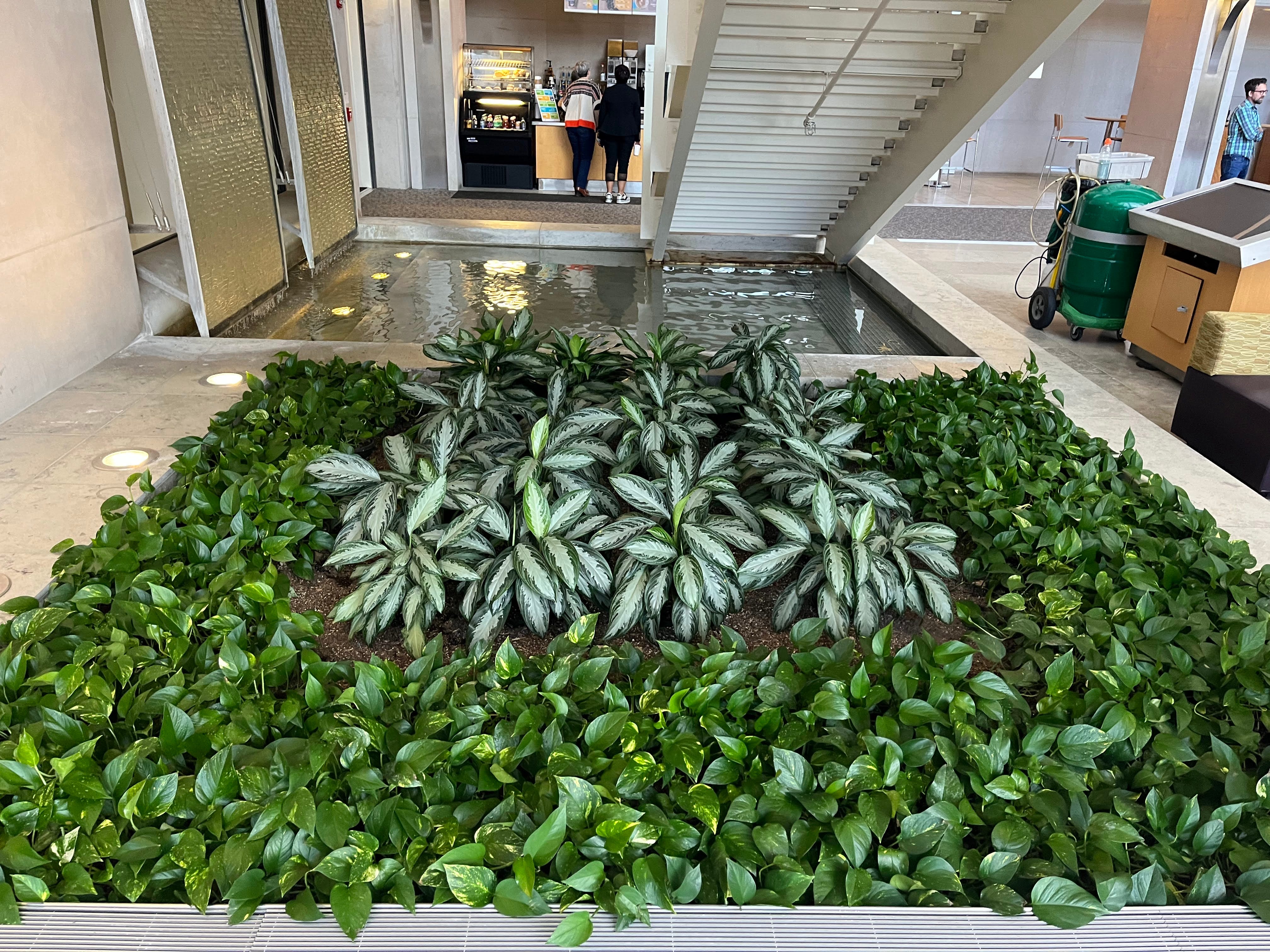
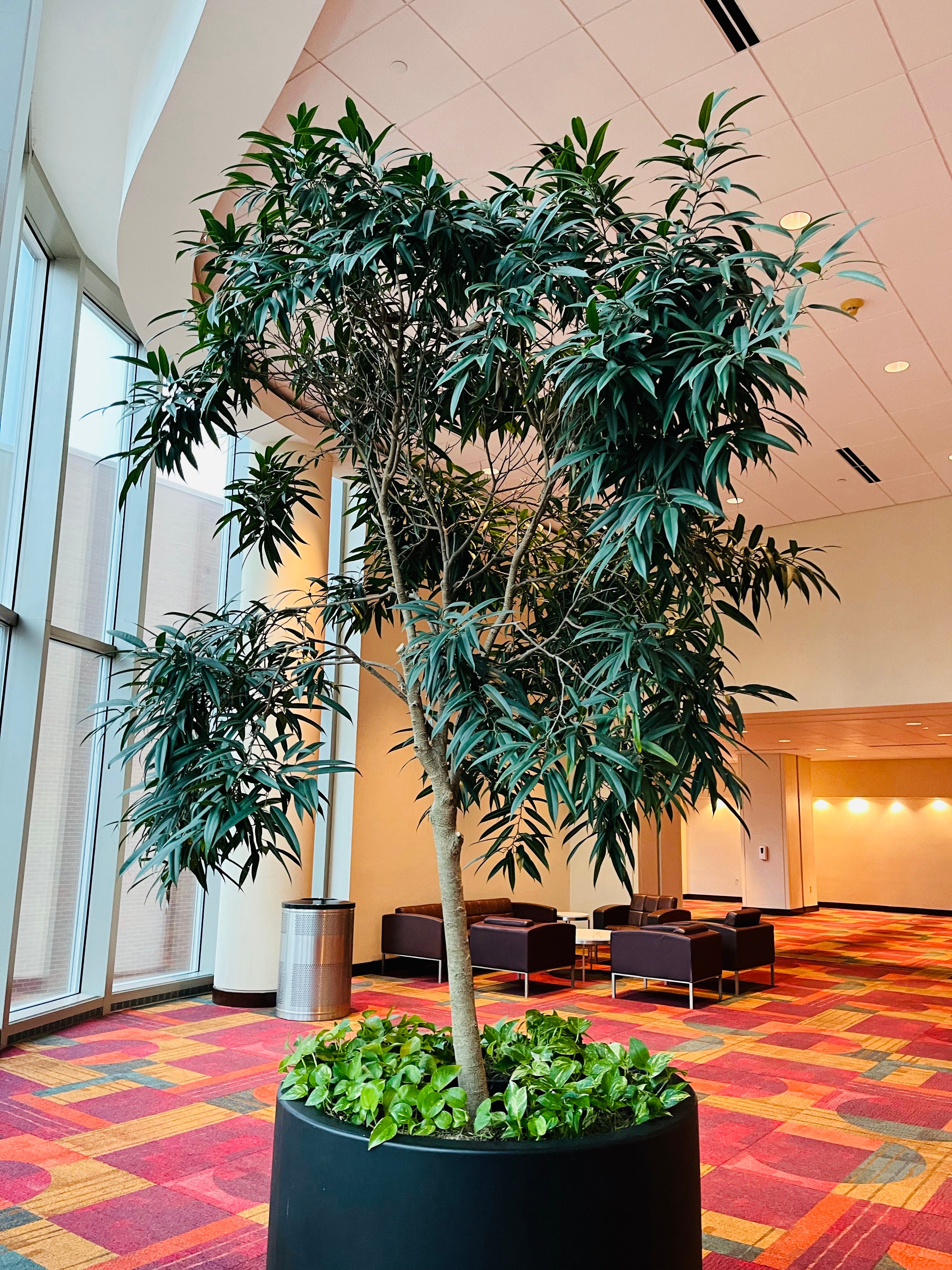
I landed a job as an Interior Plant Specialist in 2022. It was a dream job, but it came with anxiety. I was given huge accounts by the most successful companies in my city. I would visit each location once every two weeks. I held my breath each time I parked, praying the thousands of dollars of plants didn’t croak. I was puzzled. How can plants go that long without weekly, or daily, care? There were tiny plants, huge trees, plant walls, and trailing vines that spanned stories.

I tended to plants in windowless hospital basements, trees in 50 ft floor-to-ceiling windows, and everything in between. I loved my job. I did end up killing numerous plants, yet my supervisor gave me grace. It comes with the territory. People have a hard time keeping one houseplant alive, so keeping hundreds of thousands of plants alive is a feat.

She would always tell me, “You’re overwatering! Stop babying them so much. They’ll be okay.” I had a hard time trusting her. If I didn’t water a plant during my bi-weekly visit, then that means it wouldn’t get water for an entire month. Fear coursed through my veins. My way wasn’t working, so I decided to scale back on my watering. It worked! I really was loving them to death.

The less I watered, the more they thrived. I relaxed, so they relaxed. Plants need oxygen just as much as they need water. I learned that plants are forgiving. If I drown them in water, they’re dead. If I skimp on water, they might droop, but they always pop back. Plants are old as time. They have intricate root systems and complex survival mechanisms.

Did you know houseplants can sense their owners from over a mile away? They lack nervous systems, but they react to light/sound/touch/vibrations. They can alter their growth patterns based on human presence. Plants feel us. They’re ancient. I came to know and love all my charges. They were just as real to me as any human.

I had to leave this job because I moved. It was heartbreaking. I’ll never forget my first week of work. I shadowed the man who was in charge of the accounts I was taking over for two weeks. He was 6’ 4” and very masculine. He was kind and shy. On the last tree of his last shift, he broke down in tears, his shoulders moving up and down in jagged movements. I froze. I didn’t know how to interpret the situation. I looked around embarrassed at the people staring at us. When I turned back to him, he was hugging the tree and petting it. Yes. He was hugging it. I was mortified.

He apologized for getting emotional. He said these plants got him through his divorce and he grew fond of them. He said he talked to them and didn’t know how he was going to get through not taking care of them anymore. I don’t even remember what I said, but I thought he lost his mind. Little did I know, I would be doing the same thing a year later…

It’s hard work keeping plants alive. I grew fond of some and hated others. I took pride and ownership of them. I cared deeply for them. It’s been over two years since I worked there and I still wonder about them. Did the next caretaker give them the love they needed? Did they die? Do they miss me as much as I miss them?

In my opinion, caring for plants is a mirror to our interpersonal style. I loved my plants so much that I killed them. I thought more about ME than I did about THEM. I didn’t want to get in trouble for neglect, so I covered my bases by overwatering so my boss couldn’t say I didn’t try. Once I stepped back, I could see I was being selfish and wasn’t attuned to the plants needs.

I started learning their preferences. Two identical plants, sitting mere inches from each from one another, have different watering needs. It was my job to learn that, and overtime I did. I took a cautious approach and trusted that they would tell me what they needed. I observed them objectively and noticed subtle differences in their growing patterns and leaf distribution. Once I started thinking more about THEM than I did ME, they thrived.

I learned so much about relationships through plants. They were like a Freudian Psychotherapist reflecting my projections. I started to see that there were times I was smothering my husband to death even though it was veiled in love. I was thinking more about myself than his feelings, needs, and preferences. Sometimes I wanted to process everything down to the most minute detail with him, but I found that he likes space to breathe and reflect alone until he forms an opinion.

Sometimes all we need in life is a reminder that we’re coexisting with everything…plants, people, jobs, houses.