
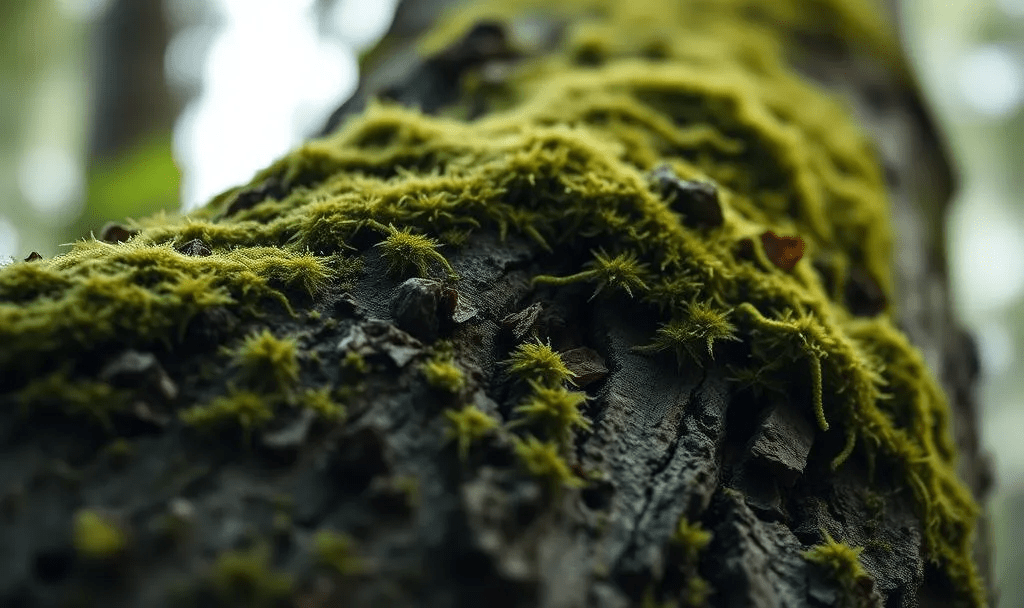
Some things don’t bloom. They cling.
Moss has no flashy petals, no towering stems, no fragrance to lure you close. But once you start noticing it—curling over stones, softening the bark of old trees, thriving in the forgotten corners of forests—it’s hard to unsee.
I first started paying attention to moss during a walk in the woods after a therapy session. I was hollowed out, emotionally cracked open, trying to make sense of how to live in a world that hadn’t always been kind to me. The trees didn’t say much that day. But the moss? The moss felt like it had something to say.
Moss thrives where other things can’t.In the natural world, moss is one of the oldest forms of plant life—resilient, humble, and quietly persistent. It doesn’t need deep roots. It doesn’t require perfect conditions. It survives where others can’t: on rocks, in shade, and with very little nourishment.
There’s something deeply comforting about that.
I think about the parts of me that survived the hard years—not because they were strong in the traditional sense, but because they learned how to stay soft. The parts that clung to scraps of kindness, that made something green from very little. That’s moss energy. It’s not about pushing through. It’s about adapting, absorbing, and continuing.
Moss is often overlooked. People step on it. Brush it aside. Sometimes we do that to ourselves, too. Especially when we don’t fit the mold of what strength is supposed to look like—loud, busy, linear, ambitious.
But moss reminds me that there’s power in softness. Power in choosing quiet. In being the one who holds the emotional texture of a room without demanding to be the center of it.
If you’ve ever felt like the background friend, the one who supports while others shine—know that moss is like you. And the forest wouldn’t be the same without it.
There’s a therapeutic lesson in moss care: it teaches presence. Moss doesn’t grow quickly. It doesn’t chase sunlight. It teaches you to slow down. To notice dampness. Texture. The way light moves through the trees.
Lately, I’ve been trying to live more like moss—choosing rest over hustle, curiosity over control. When my nervous system starts to spike, I try to remember that the most ancient forms of life are also the most gentle. They don’t shout. They whisper. And they’re still here.
If you’re in a season where blooming feels impossible, look to moss. It doesn’t rise above. It holds tight. It makes beauty out of broken places. That, too, is survival.
Maybe the softest things aren’t weak. Maybe they’re just the wisest.
 Lessons From Nature